An Overview of All PlayStation Consoles
The PlayStation family of consoles has been around for over 20 years now, and the technology and design have changed significantly over that time. In this article, we’ll take a look at some of the key changes that PlayStation consoles have gone through over the years. Sony first introduced the PlayStation brand in 1994, and since then, the business has developed four main systems, each with a new design. With Sony’s PlayStation business accounting for 78 percent of the company’s income and the release of its Pro system in November, we thought we’d take a look back at all of the PlayStation systems.
How Many Types Of PlayStation
On December 3, 1994, Sony released the first PlayStation in Japan. It went on to sell more than 100 million copies, making it the first video game system to do so. In the mid-’90s, it competed against the Sega Saturn and Nintendo 64 as part of the fifth generation of video game systems.
On December 3, 1994, Sony released the first PlayStation in Japan. It went on to sell more than 100 million copies, making it the first video game system to do so. In the mid-’90s, it competed against the Sega Saturn and Nintendo 64 as part of the fifth generation of video game systems.
Here we discuss all PlayStation consoles released by Sony to date. Sony adopted a really simple and convenient method when it came to naming their consoles, unlike their smartphones. It all started with Playstation 1 followed by the relevant numbered console after every 6-7 years and now we have the Playstation 5.
Playstation 1
This was the first console that Sony released which went on to become a massive success and gave Sony huge confidence as well. Believe it or not, Sony was not meant to launch the Playstation on its own at first, they had a deal with Sega to launch a console in partnership with them using their expertise and making sure that they do it right the first time. But Sega pulled off from the deal only a few months prior to launch forcing Sony to launch their own.
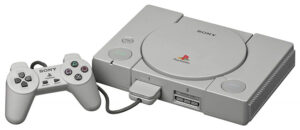
What Sega didn’t know at the time was the amount of work Sony put into making this console and Sony even one-upped the Playstation 1 by releasing it with a whole new format of media storage which was Compact Disks at the time. This allowed the developers to create better games due to the higher bandwidth of the CDs and people loved the end results. Games looked stunning on the new console and 3D animations were so fluid that gamers flocked to stores just to get their first glance of the console in action. You can also get the best Fordeal Coupon Code from CouponPlusDeal and save money on purchasing PlayStation. This combined with a plethora of great launch games cemented Sony’s strong start in the console domain and Playstation 1 became a massive hit worldwide.
Sony also revised the controller immediately after launching the console and added Analogs for an even more immersive feeling.
After a while, Sony got better at making the chip for the console and released a slimmer version of the Playstation 1 which they called PS one.
This slimmer version of the console also happens to be the one I owned as a kid and I can safely say that the built quality of this machine was unlike anything I have ever seen.
Playstation 2
After the success of the first Playstation console, the hype of the gamers was through the roof when rumors started circulating in 1997 that Sony is making a successor to Playstation 1. Sony was also under pressure as Microsoft and Nintendo were hard at work releasing their next console. But Sony started the development of the second console right after they launched the first one and this gave them a huge lead when it came to R&D.

And just like when Sony released the first Playstation with a newer media format to make sure their console has the latest technology in it, they did it again with Playstation 2 and released it with a brand new media format at the time that was the Digital Video Disk (DVD) format. This gave the developers additional bandwidth for data transfer and storage and allowed them to make games that were absolutely gorgeous at the time.
This combined with the fact that Sony made PS2 be completely backward compatible with PS1
PlayStation 3

The PlayStation 3 was first released in Japan on November 11, 2006 (a week later in North America), and has sold more than 80 million copies worldwide, competing against Microsoft’s Xbox 360 and Nintendo’s Wii. It was the most costly system of the group when it was released, at $599.99, although it was the first console to include a Blu-ray drive and was priced lower than other standalone Blu-ray players at the time.
The PlayStation 3 also had Wi-Fi connectivity, as well as the PlayStation Network, which allowed players to download games and access video-streaming services like Netflix and YouTube.Also, Sony released the PS3 slim in September 2009. and after that, The PlayStation 3 was super slim, was released in September 2012.
PlayStation 4

The PlayStation 4 was released in North America on November 15, 2013, and it sold one million copies in its first 24 hours, making it the fastest-selling system ever.
The PS4 was the first system from Sony to have a CPU based on the x86 instruction set, which is the same architecture used in gaming PCs. It has an 8-core AMD x86-64 Jaguar CPU running at 1.6GHz, as well as 8GB of GDDR5 RAM to share with the inbuilt AMD Radeon GPU.
Later this year, the PS4 will be able to support PlayStation VR.
Sony’s trend of introducing smaller, lighter variations continues with the PS4 slim, which ditches the PS4’s harsh edges in favor of rounded corners. The inclusion of 5GHz Wi-Fi, Bluetooth 4.0, and USB 3.1 capabilities are just a few of the improvements beneath the hood. The PS4 Pro will be available on November 10, 2016. Unlike most design updates, the PS4 Pro comes with a significant performance boost.
PlayStation 5

With the release of the PS5, the next generation of PlayStation is finally here. Last year, Sony appears to be continuing the strategy that made the PS4 so popular: sell systems that can play first-party games from Sony’s historic brands, as well as outstanding third-party games. You can anticipate improved visuals in your games, and the PS5 will also support high refresh rates, making games seem smoother (if you have a display that supports those refresh rates). Furthermore, the PS5’s proprietary SSD promises to provide a significant improvement in loading times it may.
Sony is offering two versions of its impending next-generation system, similar to Microsoft. A PS5 with a 4K Blu-ray drive is available for $499.99. However, the Digital Edition PS5 may be purchased for $100 cheaper, at $399.99. (which also looks noticeably thinner than its more expensive sibling). Unlike Microsoft, the only difference between those two models is whether or not they include a disc drive and how much they cost.